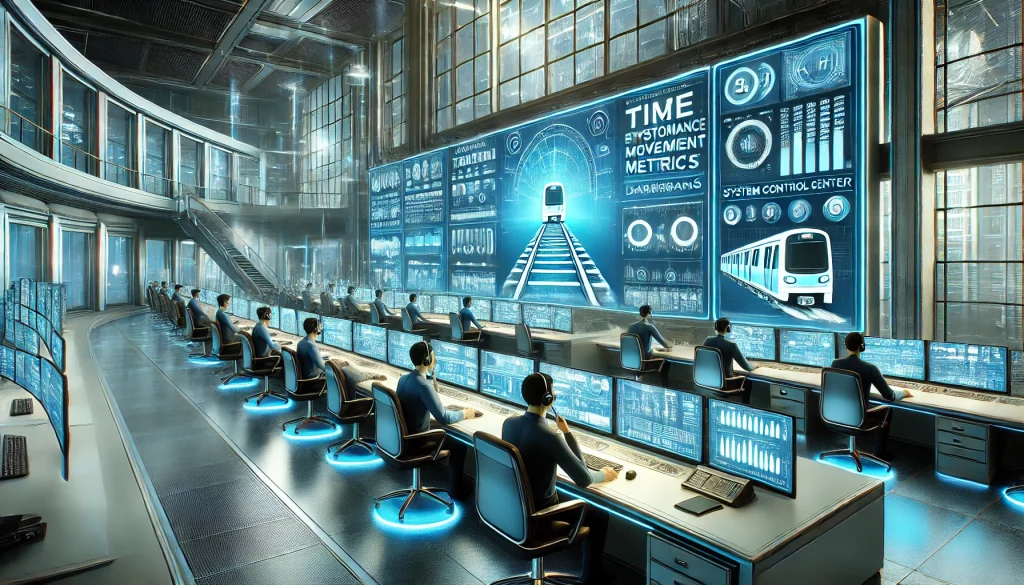
Metro rail systems are more than just a mode of transportation—they are the heartbeat of modern urban life. Passengers choose metro systems because they promise speed, safety, comfort, and reliability compared to other modes of transport. However, meeting these expectations consistently requires robust monitoring of Key Performance Indicators (KPIs) at both trip and station levels.
This article provides a comprehensive overview of what passengers expect during their metro journeys, and explains how trip-based KPI monitoring ensures these expectations are fulfilled.
Passenger Expectations During a Metro Journey
A metro journey is not simply a ride—it is a complete service experience from the moment a passenger enters the station until they exit at their destination. The following factors are most important from a passenger’s perspective:
1. Punctuality and Reliability
- Expectation: Trains should arrive and depart as per schedule, without unexpected delays or cancellations.
- Impact: Even small delays can disrupt daily routines, job timings, or interconnections with buses and feeder services.
- Example: A missed train during peak hours can mean overcrowding in the next train, reducing comfort and safety.
2. Safety and Security
- Expectation: A safe environment at both stations and trains. This includes CCTV surveillance, clear announcements, well-trained staff, and rapid emergency response.
- Impact: Any safety incident can erode passenger confidence in the system.
3. Comfort and Environmental Control
- Train Temperature: Should be maintained in the comfort range (typically 23–27°C). Too warm leads to discomfort, while too cold causes complaints.
- Station Temperature: Platforms and concourses should be ventilated and climate-controlled to handle peak crowding.
- Ride Smoothness: Acceleration and braking must be gradual. Passengers feel unsafe when jerks occur due to emergency braking unless it is for genuine safety reasons.
4. Information Transparency
- Expectation: Real-time updates on train arrival, route changes, or delays via Passenger Information Systems (PIS).
- Impact: Information empowers passengers to make alternate decisions, reducing frustration during disruptions.
5. Accessibility and Inclusiveness
- Facilities like elevators, escalators, tactile paving, and priority seating ensure that seniors, differently-abled passengers, and families with children travel comfortably.
6. Evacuation Readiness
- Expectation: In case of an emergency, passengers must be safely evacuated either from the station platform or, if needed, from the train at track level.
- Impact: Poor evacuation planning can lead to panic, injuries, and loss of public trust.
7. Affordability and Value
- Expectation: The fare should reflect good value when compared to alternative transport modes.
- Impact: If service quality falls short, passengers may question fare justification.
What to Monitor in a Trip: KPI Parameters
Metro operators use trip-based KPIs to measure how each train performs from the start station to the end station, and sometimes station-to-station. These metrics are critical to align operations with passenger expectations.
Here are the major KPIs:
1. Trip Completion
- Was the journey completed from origin to destination without cancellation?
- A trip is considered cancelled if:
- Minimal dwell was not performed.
- More than 50% of doors per car failed to open.
- One or more scheduled stations were skipped.
- Delay exceeded 2× scheduled headway.
2. Dwell Time Performance
- Minimal dwell: The minimum time a train must stop to allow safe boarding/alighting.
- Nominal dwell: Standard dwell time under normal passenger flow.
- Maximum dwell: Upper limit to prevent cascading delays.
- Impact: If dwell times are not managed, it causes overcrowding, safety risks, and system-wide delays.
3. Punctuality (On-Time Performance)
- Train should arrive at the end station within a tolerance band.
- Delay is defined as: If arrival time at the end station is more than the difference between slow-speed travel (ATS-defined + minimal dwell) and high-acceleration travel time.
4. Door Operation Monitoring
- At least 50% of doors in each car must open correctly.
- Faulty doors directly impact passenger safety and boarding efficiency.
5. Passenger Service Systems Availability
- Systems like PA announcements, displays, lighting, ticketing machines must function from 15 minutes before first train service until 5 minutes after last train departs.
6. Environmental Comfort (Temperature)
- Train cabin temperature and station platform temperature must stay within the prescribed comfort band. Deviations indicate non-compliance.
7. Ride Comfort & Safety Events
- Monitor sudden jerks caused by emergency braking.
- KPIs should distinguish between safety-critical brakes (justified) vs. operational inefficiencies (avoidable).
8. Evacuation Readiness
- Evacuation at track level: In case of failure between stations.
- Evacuation at station platform: In case of fire, technical fault, or security incident.
- Both should be tracked as critical KPIs.
9. Force Majeure Events
- Natural events (flood, earthquake, storm) or man-made (civil unrest, accidents, grid power failure).
- These must be excluded from operator penalties but recorded for reporting and planning.
Why This Matters for Passengers
- Punctual trips = Passengers trust the metro as a dependable mode.
- Consistent dwell times = Smooth boarding, less crowding.
- Temperature compliance = Comfortable and stress-free ride.
- Reduced emergency jerks = Safer journey, especially for standing passengers.
- Evacuation readiness = Confidence that safety is prioritized.
When KPIs are well-monitored and corrective actions taken, passengers experience the benefits directly in their daily commute.
Conclusion
Passenger expectations are simple: they want a metro system that is safe, reliable, comfortable, and predictable. To deliver this, metro operators must adopt comprehensive KPI monitoring that covers punctuality, dwell, temperature, safety events, evacuation readiness, and force majeure considerations.
By combining trip-based and station-to-station KPI monitoring, operators gain a dual advantage: macro-level performance visibility and micro-level insights for continuous improvement. The result is not only higher operational efficiency but also greater passenger satisfaction and trust in the metro system.